


 Next.js websites
Next.js builds for sites that do more than sit there.
When a site needs accounts, dashboards, live data or search, static pages stop being enough. Plyo builds those in Next.js, React on the front, rendering on demand, deployed close to your users.
- React and TypeScript
- Rendered on demand
- Deployed to the edge



What is a Next.js website?
A Next.js website is a site or application built on Next.js, a React framework that can render pages on the server, at the edge or in the browser, depending on what each page needs.
Most marketing sites are better off pre-built as static HTML. Next.js earns its place when content is personal or changes constantly: a logged-in dashboard, a search interface over a large dataset, a booking system, pricing that depends on who is asking. It can still pre-render the public pages, so you are not trading away speed to get the functionality.
- React based
- A large, stable ecosystem
- Renders per page
- Static, server or client
- Runs on the edge
- We deploy to Cloudflare
Why teams choose Next.js.
The framework to reach for when a website turns into a product.
-
Handles dynamic content
Pages that depend on who is logged in, what is in stock or what changed a second ago.
-
One codebase, site and app
The marketing pages and the product live together instead of in two systems that drift apart.
-
Still fast where it counts
Public pages can be pre-rendered and cached, so the landing pages stay quick.
-
Serious data handling
Built for APIs, databases and search over datasets too big to put in a CMS.
-
A deep talent pool
React is the most widely used front-end framework, so you are never locked to one developer.
-
Incremental to build
Start with what you need and add routes, roles and features as the product grows.
When Next.js is the right call.
Next.js is more machinery than most marketing sites need. Here is where the extra weight pays for itself.
| Area | Next.js build | Static site (Astro or Webflow) |
|---|---|---|
| Logged-in areas | Accounts, roles and permissions built in | Not what it is for |
| Live or personal data | Rendered per request | Rebuilt on publish |
| Search over large datasets | Server-side, over any database | Limited to what ships with the page |
| Marketing pages | Pre-rendered and cached | Pre-built. Simpler and cheaper |
| Running costs | A server or edge runtime to pay for | Essentially free to host |
| Ongoing maintenance | Dependencies to keep current | Very little |
Everything you need to ship.
Every Next.js build includes the essentials below. Auth providers, payments and third-party APIs are scoped per project.
Get a quote- Product and UI design Screens and states designed before anything gets built.
- Next.js development TypeScript, App Router, and components built to be reused.
- Data layer Database, API routes and caching set up around how the product reads and writes.
- Authentication Sign-in, roles and protected routes where the product needs them.
- SEO for public pages Pre-rendered marketing routes with meta data, schema and sitemaps.
- Deployment pipeline Edge deploys, preview environments and rollbacks.
- Handover Documented code and a walkthrough for whoever maintains it next.
Next.js is a great fit for…
-
SaaS products
Marketing site and application sharing one codebase and one design system.
-
Customer portals
Logins, dashboards, documents and account management.
-
Data-heavy sites
Search, filtering and maps over datasets a CMS cannot hold.
-
Marketplaces and booking
Availability, pricing and transactions that change by the minute.
Projects built this way.
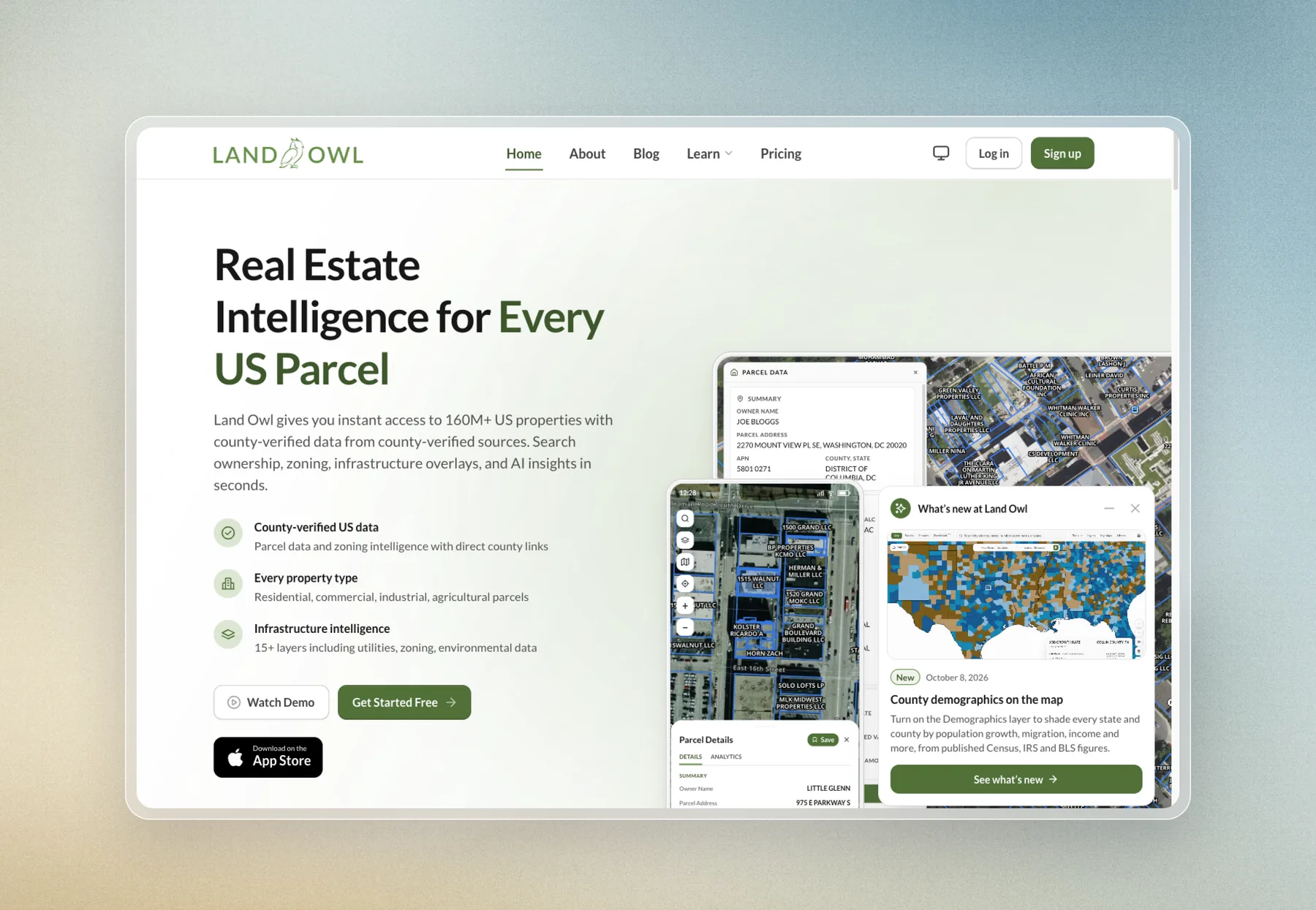
Platforms where the data, not the page, is the product.

Explore our other services.
- Astro websites Custom sites pre-built into lean HTML, for speed and search.
- Webflow websites Visual, CMS-powered sites your marketing team can run day to day.
- Shopify stores Custom storefronts and checkouts built to convert.
- Cloudflare hosting Fast, secure global hosting with SSL and protection handled for you.
Updated
What is Next.js used for?
Next.js is used for websites and web applications that need rendering on demand: logged-in dashboards, customer portals, search over large datasets, marketplaces, booking systems and SaaS products where the marketing site and the app share one codebase.
Is Next.js better than Astro?
They solve different problems. Astro is better for content sites that can be pre-built. It is faster and cheaper to run. Next.js is better when pages depend on who is asking or on data that changes constantly. We recommend whichever matches what your site has to do.
Is Next.js good for SEO?
Yes, when it is built properly. Public pages should be pre-rendered or server-rendered so crawlers get complete HTML. Problems usually appear when everything is rendered in the browser instead, which we avoid.
Where do you host Next.js sites?
We deploy to Cloudflare, which runs the application close to your users and gives you SSL, DDoS protection and caching as standard. Vercel is also an option if you prefer it.
How long does a Next.js project take?
A small product takes eight to twelve weeks. Anything with accounts, payments or significant data modelling takes longer, and we usually ship it in stages rather than all at once.
Can you work on an existing Next.js codebase?
Yes. We can review what is there, pick up feature work, or untangle a build that has grown faster than its structure.
Do I need React experience on my team?
Not to launch. If you plan to maintain it in house, React experience helps, and being the most widely used front-end framework, it is the easiest skill to hire for.
Custom Astro websites. Built on Cloudflare.
Plyo Studio is an independent web studio that designs and builds fast, search-ready websites, web apps and interactive maps. Sites are custom-built in Astro and hosted on Cloudflare, so they load quickly and are easy for search engines and AI answer engines to read.
Founded by Chloe Nixon, a full stack developer and UI/UX designer from Australia, and Micky, a software engineer from New Zealand. Clients work directly with the founders from the first call to launch. Typical work: custom websites, migrations off Webflow, WordPress, Wix and Squarespace, web apps, and interactive maps and GIS. Projects are quoted at a fixed price before work starts.